Solar Lights Explained: Technology, Structure, and How They Work
May 03,2025 | JD-SmartLighting
Solar lighting has become an essential part of modern outdoor infrastructure, combining advances in photovoltaic energy capture, battery storage, and high-efficiency LED illumination. Far beyond small decorative units, today's solar lights are engineered systems capable of delivering reliable, autonomous lighting across industrial, commercial, and public sectors.
JD Smart Lighting is a leading provider of innovative solar lighting solutions and we provide an in-depth look at what solar lights are, how they work, and the key technologies behind them, offering a complete understanding of their role in professional-grade lighting projects.
What Are Solar Lights?
Solar lights are self-contained lighting systems that harness energy from sunlight, store it, and use it to provide illumination without relying on the traditional electrical grid. A standard solar light typically consists of:
- Photovoltaic (PV) Panel: Converts sunlight into electrical energy.
- Energy Storage System (Battery): Stores electricity for use at night or during periods of low sunlight.
- LED Light Source: Provides efficient, long-lasting illumination.
- Controller Unit: Manages charging, discharging, and operational timing.
- Mounting Structure: Supports and protects the entire assembly.
Each component must be designed and calibrated carefully to ensure optimal system efficiency, longevity, and reliability.
How Do Solar Lights Work?
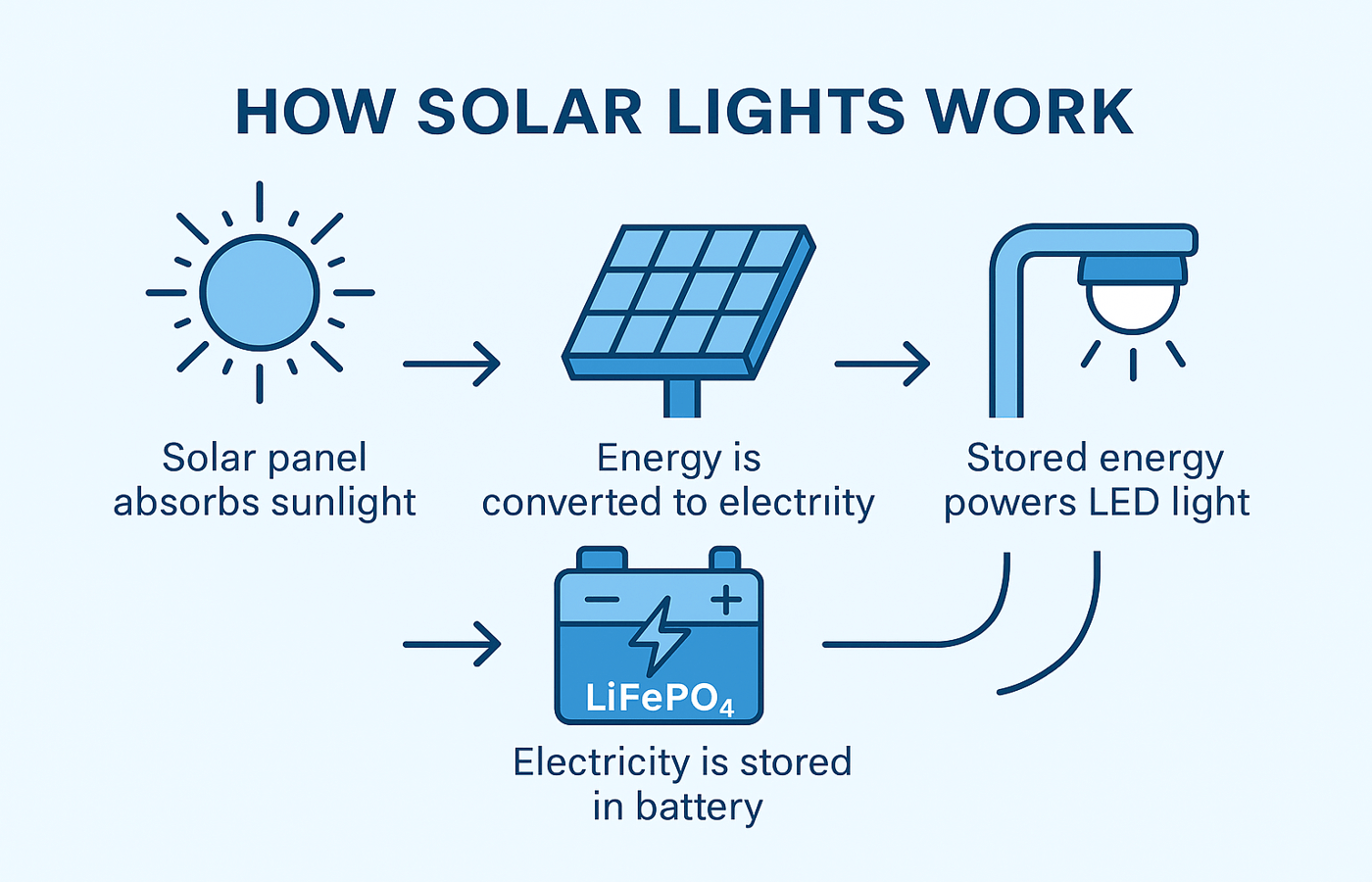
The working process of a solar light system involves several integrated stages:
1. Daytime Energy Capture
During daylight hours, the solar panel captures sunlight and converts it into direct current (DC) electricity. The panel's efficiency depends on factors like material type (monocrystalline or polycrystalline), environmental conditions, and the angle of installation.
2. Energy Storage
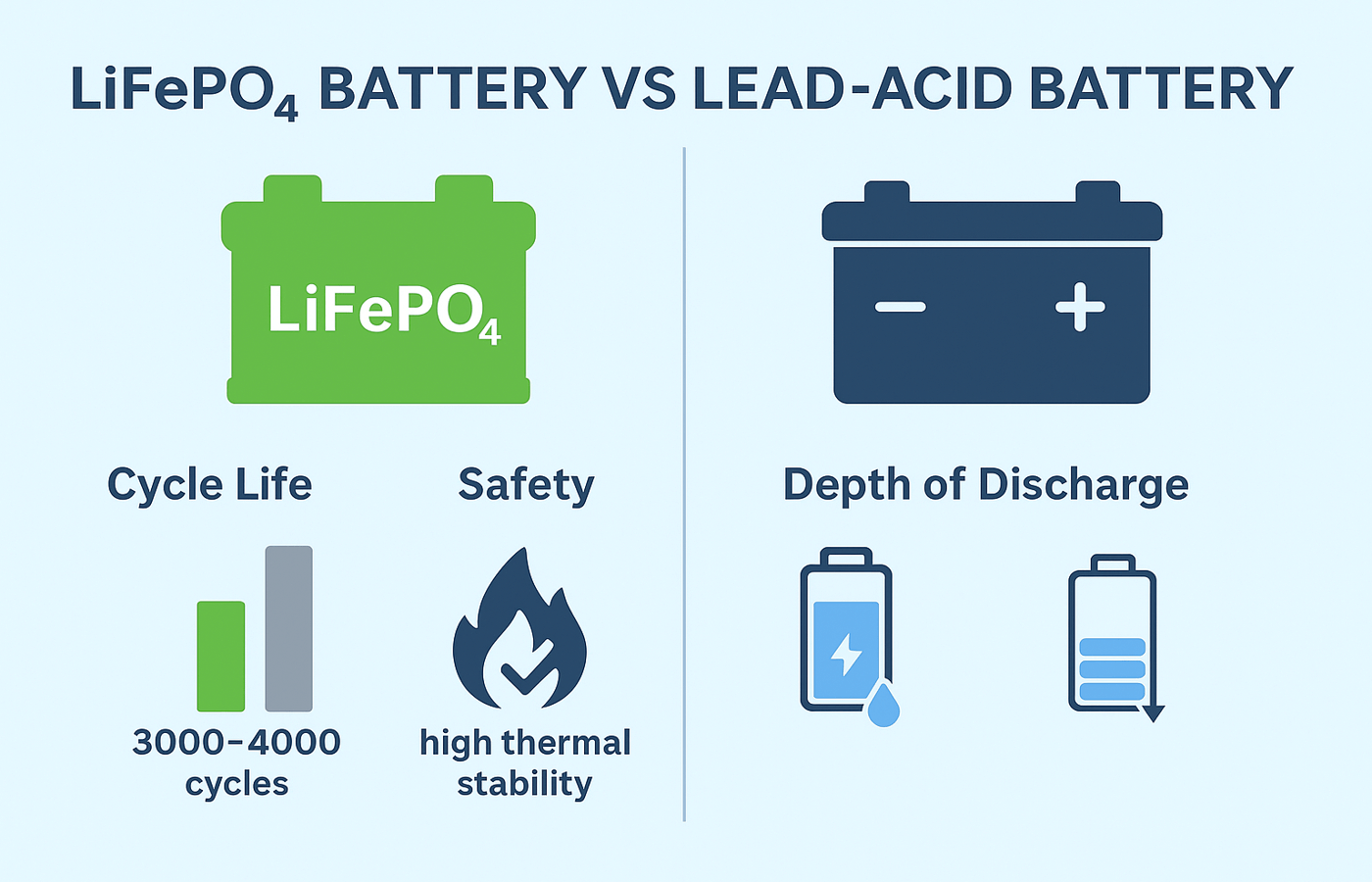
The electricity generated is stored in a rechargeable battery—typically LiFePO₄ (Lithium Iron Phosphate) for professional systems, offering:
- High cycle life (3000–4000 cycles)
- Safe thermal stability
- Deep depth-of-discharge (DOD) capability
- Proper energy storage ensures that the system can deliver power consistently even during cloudy days or after multiple nights without full sunlight.
3. Controlled Discharge
After sunset, the system's intelligent controller activates the LED lights, drawing power from the battery. Advanced controllers optimize the discharge curve to maximize lifespan and adjust brightness according to pre-set profiles or motion detection triggers.
4. Lighting Output
High-efficacy LEDs, often delivering ≥130 lumens per watt, ensure strong, consistent illumination with minimal energy consumption. The optics are designed to direct the light precisely, improving visibility and minimizing light pollution.
Main Components of a Professional Solar Light
Solar Panel: Preferably monocrystalline for higher efficiency and compact size.
Battery: LiFePO₄ batteries are preferred for durability and safety.
Controller: MPPT (Maximum Power Point Tracking) controllers maximize solar harvest and battery charging efficiency.
Lighting Unit: Industrial-grade LEDs with adjustable optics and CCT (Correlated Color Temperature) options.
Housing: Typically IP65/IP66 rated for dust and water resistance, often with anti-corrosion finishes for coastal or industrial environments.
Types of Solar Lights in Commercial Use
- Solar Street Lights: Installed on roads, parking lots, and public squares.
- Solar Flood Lights: Used for security, warehouses, construction sites.
- Solar Garden or Landscape Lights: Smaller-scale, aesthetic-focused models.
- Solar Pathway Lights: For sidewalks, parks, and campuses.
- Solar Wall Lights: Mounted on building facades for entrances and perimeter lighting.
Each type is optimized for specific installation contexts based on output requirements, mounting heights, and environmental factors.
The Evolution of Solar Light Technology
In recent years, solar lighting technology has undergone significant advancements:
- Higher solar panel efficiencies (up to 22%) reduce panel size and cost.
- MPPT charge controllers have improved energy capture under varying light conditions.
- LED technology now offers longer lifespans (up to 100,000 hours) with better color rendering and light distribution.
- Smart control systems allow remote monitoring, adaptive brightness, and fault detection.
- Integration with IoT networks enables solar lights to become part of broader smart city infrastructure projects.
As regulations tighten around sustainability and carbon reduction, solar lights have transitioned from niche solutions to mainstream options for outdoor illumination.
Conclusion
Solar lighting represents a sophisticated fusion of renewable energy harvesting, energy storage innovation, and precision illumination engineering. Understanding what solar lights are and how they work is essential for professionals seeking robust, future-ready lighting systems for infrastructure, logistics, public safety, or commercial applications.
As the market matures, solar lights are proving to be not just environmentally responsible—but technically superior options for many outdoor lighting needs.
Comment